Picking a trustworthy Menstrual Disc Manufacturer in China isn’t just about flipping through product photos or checking factory prices—it’s a bit more involved. Buyers from around the globe really need solid proof of material quality, consistent production, and quick, clear communication. A reliable supplier should be willing to openly chat about where they source their silicone, how they mold the discs, their cleaning standards, and how they handle packaging—ideally in plain English. Plus, they should have recent test reports, quality certificates, and batch traceability info where relevant. It’s important to verify claims rather than just take them at face value.
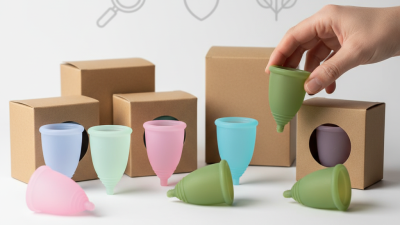
Details really do matter here. A good Menstrual Disc should have a smooth rim, keep its shape well, and feel flexible, with no sharp edges or weird smells. It’s smart for buyers to ask for samples, check the sealing quality, and even test different sizes for comfort. Doing a factory audit can reveal practical stuff like how they control dust, train staff, organize their warehouse, and perform final inspections. These checks support an honest review because real manufacturing data beats shiny marketing talk every time.
Keep in mind, the biggest companies aren’t always the best ones. Sometimes, smaller factories excel at customizing products, making quick samples, or communicating more carefully. But others might look super professional on the surface, yet fall short on documentation or give vague answers—and that can be a big deal.
There’s no such thing as a perfect ranking, of course. This guide looks at Chinese suppliers based on their product design, manufacturing experience, quality control, ability to customize, export support, and what buyers are saying. It also considers hidden risks like inconsistent sizing between batches or unclear user instructions. Since standards and regulations can vary depending on where you're selling, it’s a good idea to double-check the requirements for your target market. Doing a thorough supplier review takes some time, but it’s worth it—they can help you avoid costly rework, shipment delays, and quality issues down the line.
Global Menstrual Health Demand: 1.8 Billion Menstruating People (UNFPA)
Around 1.8 billion people menstruate worldwide, according to UNFPA. This figure shows why menstrual discs require more than attractive packaging. They need dependable materials, consistent dimensions, and clear user instructions. A disc placed incorrectly can leak, even when the product passes factory inspection. That practical gap matters to global buyers.
The World Bank estimates that 500 million women and girls lack access to adequate menstrual management. UNICEF and WHO also report major differences in water, sanitation, hygiene, and privacy access. These findings should influence sourcing decisions in China. Buyers should review silicone documentation, production traceability, dimensional testing, and batch-level quality records. They should also request independent laboratory results, not only supplier declarations. Small details matter. A rough rim or unclear size guide can affect comfort within hours.
Experienced purchasing teams often compare Menstrual Cup Manufacturers with disc-focused factories, because tooling, sealing design, and fit testing differ. ISO 13485-style quality practices may indicate stronger process control, but certification alone does not prove real-world comfort. User trials across different anatomies remain important. The available data is broad, not perfect. The 1.8 billion estimate does not reveal every user’s income, culture, mobility, or washing conditions. That uncertainty deserves honest product testing, localized instructions, and careful claims from manufacturers.
China’s OEM Manufacturing Base: Silicone Grades, MOQ, and Lead-Time Metrics
China’s OEM base supports menstrual disc projects with medical-grade liquid silicone rubber, often specified as platinum-cured and tested for biocompatibility. ISO 10993-5 and ISO 10993-10 guide cytotoxicity and irritation assessments, while USP Class VI testing adds useful evidence for material safety. A certificate alone is not enough. Buyers should request batch records, hardness data, pigment declarations, and migration test results.
Typical pilot MOQs range from 1,000 to 3,000 pieces per size and color.
Large production runs may require 5,000 to 20,000 pieces, depending on tooling and packaging. QIMA’s 2024 Supply Chain Barometer highlights continued pressure on supplier reliability and production visibility. That matters here. A factory quoting 20 days may exclude mold trials, laboratory testing, or artwork approval.
Practical lead times usually reach 35–60 days after design confirmation. New tooling can add 10–20 days, while third-party testing may add another two to four weeks. Some suppliers offer lower MOQs, but unit costs can rise sharply. That trade-off is often missed. Grand View Research’s menstrual cup market analysis projects continued category growth through 2030, although menstrual discs remain a narrower segment. Buyers should therefore compare production evidence, not only price. I would also challenge one common assumption: a softer disc is not automatically safer or more comfortable. Geometry, edge finish, compression recovery, and user testing all influence performance.
Top Manufacturer Profiles: Factory Audits, Certifications, and Export Data
Top China Menstrual Disc Manufacturers for Global Buyers?
Factory profiles should begin with evidence, not polished product photos. Industry reports often group menstrual discs with reusable menstrual products. Grand View Research projected the global menstrual cup market to reach about USD 1.89 billion by 2023. This signals demand, but disc-specific figures remain less consistent.
A credible factory should provide recent audit reports, production addresses, and corrective-action records. Check whether the audit covers molding, silicone mixing, clean packaging, and worker safety. ISO 9001 supports quality management, while ISO 13485 may apply when the product is regulated as a medical device. Material files should include silicone composition, migration testing, and restricted-substance results. Ask for batch traceability.
Small details matter. Inspect how operators label molds. Review whether rejected discs are separated from finished stock. Request laboratory reports with sample numbers and test dates. Certifications can expire. Logos alone prove little.
Export data adds another verification layer. UN Comtrade and national customs databases can reveal shipment patterns, destination markets, and declared product categories. Classification is imperfect, because menstrual discs may appear under broader plastic or hygiene codes. That weakness needs careful interpretation. A supplier showing regular shipments may still outsource production. Confirm factory ownership through site visits, video audits, and matching invoice details.
No audit is perfect. Even experienced buyers can miss seasonal subcontracting. The safest profile combines physical inspection, independent testing, certification verification, and consistent export records.
Sources: Grand View Research, 2024; UN Comtrade international trade database; ISO quality-management standards.
Global Compliance Checks: FDA Class II Status and ISO 10993 Testing
Top China Menstrual Disc Manufacturers for Global Buyers?
Global buyers should verify regulatory evidence before comparing price, packaging, or production capacity. In the United States, menstrual discs may fall under a Class II medical device pathway, depending on their intended use and product design. A supplier should provide the relevant FDA 510(k) clearance or a clear explanation of its regulatory status. FDA’s product classification database remains the practical starting point, not a supplier’s marketing claim.
Class II does not mean every disc is automatically approved.
ISO 10993 evidence also needs careful review. The FDA’s guidance on ISO 10993-1 recommends a risk-based biological evaluation based on material, tissue contact, and contact duration. For a disc used internally, buyers commonly expect evidence covering cytotoxicity, irritation, sensitization, and chemical characterization.
Testing should identify the exact silicone or elastomer formulation, not merely a similar material. Ask for reports from an ISO/IEC 17025-accredited laboratory. Check sample photographs, test dates, and product codes. Small mismatches matter.
Grand View Research has reported continued growth in the global menstrual care market, increasing pressure on manufacturers to document safety and quality. Yet market growth is not proof of compliance. A 2024 supplier audit by an independent buyer should include batch traceability, sterilization controls, packaging integrity, and post-market complaint procedures.
Some factories present ISO 13485 certification as if it proves product safety. It does not. I would treat incomplete biological testing as a purchasing risk, even when the factory looks experienced.
Buyer Comparison: Unit Cost, Defect Rates, Private Labeling, and Logistics
For global buyers, comparing China menstrual disc manufacturers requires more than a low quotation. Grand View Research estimated the global menstrual cup market at about USD 1.04 billion in 2022, with continued growth expected through 2030. This demand increases pressure on factories, tooling, and inspection teams. Request the unit cost by volume, material, packaging, and delivery term. A disc priced at USD 0.80 may become USD 1.35 after custom molding, cartons, testing, and ocean freight. Check every assumption.
Defect rates need documented evidence, not vague claims. Ask for the latest inspection records, batch size, acceptance level, and corrective-action reports. A practical target may use AQL 1.5 for critical product checks, but buyers should confirm their own quality plan. ISO 2859-1 provides sampling guidance, not a guaranteed safety result. Private labeling should cover mold ownership, artwork approval, barcode control, and traceability. The same questions apply when evaluating Period Cup Manufacturers. Some suppliers offer fast samples but weak production records. That mismatch deserves attention.
Tips: Order samples from three factories. Measure rim recovery, softness, odor, and pouch stitching. Request a pre-shipment inspection before final payment. Compare shipping by landed cost, not freight alone. The World Bank’s 2023 Logistics Performance Index shows major differences in customs and delivery reliability between markets. Add buffer time. I once saw a “ready” shipment delayed by missing carton marks. Small details matter.
Sustainability Benchmarks: Reusable Products and WHO/UNICEF Hygiene Data
Global buyers assessing Copas Menstruales Manufacturers should treat sustainability as more than reusable packaging. A menstrual disc can reduce repeated purchases, but its value depends on safe materials, durable design, and clear cleaning guidance. Manufacturers should disclose material specifications, production controls, and recommended replacement periods. Buyers also need practical evidence, such as leak testing, edge inspection, and user trials across different body types.
WHO and UNICEF hygiene data offer an important benchmark, although menstrual health reporting remains incomplete across many countries. Their Joint Monitoring Programme tracks household water, sanitation, and hygiene conditions, which directly affect menstrual product use. A reusable disc requires access to clean water, private washing space, and safe storage. Without these basics, “reusable” may become difficult rather than sustainable. Clean water matters.
Manufacturers serving international markets should explain how users can wash and dry the product safely, especially where boiling facilities or private bathrooms are limited. Packaging should include simple diagrams, not dense technical language. Production audits, batch traceability, and documented material testing strengthen buyer confidence. Still, sustainability claims deserve careful questioning. A long product lifespan is often estimated, not guaranteed. Disposal, transport emissions, and user behavior also influence the final footprint. Evidence is uneven. That should remain visible in supplier evaluations.
Conclusion
This guide examines the growing global demand for menstrual health products, serving an estimated 1.8 billion menstruating people worldwide. It explains how menstrual discs are designed, including medical-grade silicone options, fluid capacity, comfort considerations, and commonly promoted wear times of up to 12 hours, while emphasizing that users should follow product instructions and personal hygiene practices.
For international buyers, the article outlines how to evaluate China-based Menstrual Disc Manufacturers through silicone quality, minimum order quantities, production lead times, factory audits, certifications, and export experience. It also compares suppliers by unit pricing, defect-control systems, private-label capabilities, packaging, and logistics support. Special attention is given to compliance checks, including FDA Class II classification where applicable and ISO 10993 biological safety testing. Finally, the guide highlights sustainability advantages of reusable products and encourages buyers to assess hygiene performance, transparent documentation, responsible manufacturing, and long-term product reliability.