Leave Your Message
0%

Picking a manufacturer for a Customized Menstrual Cup isn't just about comparing prices or looking at pretty product photos. You really need to find someone who gets that body diversity matters, understands safety in materials, and knows their mold engineering, quality control, and responsible manufacturing. Sure, a cup might look simple, but trust me, it’s not.

Dr. Jen Gunter, an OB-GYN and women’s health author, once said, “Menstrual Cups are safe and effective for most people when used properly.” Her words put the spotlight on a key responsibility for manufacturers. Customization should make the cup more comfortable and easier to use, not just be about throwing in fancy claims. You want to find brands willing to explain where they source their medical-grade silicone, how they do hardness tests, ensure dimensional accuracy, handle odor control, and keep track of their production process. Don’t hesitate to ask if they test prototypes with real users and take their feedback to improve the design — experience really makes a difference here. A slick catalog or shiny website doesn’t mean much if the product itself isn’t solid.

Good suppliers should be open about their procedures — providing clear documentation, factory audit reports, quality management protocols, packaging standards, and testing results from reputable labs. They should also be transparent about how they deal with things like colorants, seams, air holes, stems, and sterilization instructions. Pay attention to how they communicate — slow replies or vague answers can cause headaches down the road.

I’ve fallen into the trap of focusing too much on minimum order quantities before, and honestly, learning from that was a lesson. Low prices might seem tempting, but they can hide issues like weak inspection processes, inconsistent silicone quality, or poor after-sales support. A better question to ask is: *Can this manufacturer reliably reproduce the same Customized Menstrual Cup every single time?* Ask for proof, not just promises. Honest suppliers will be open to scrutiny, admit when they don’t know something, and suggest design tweaks if needed. Sometimes, a little honesty beats a perfect sales pitch any day.
How to Choose a Customized Menstrual Cup Manufacturer?

Define Your Custom Menstrual Cup Product Requirements

Before choosing a customized menstrual cup manufacturer, define the product you actually need.

Start with the intended users, including age range, experience level, anatomy, activity patterns, and comfort concerns. A cup for beginners may need softer silicone, clearer measurement marks, and an easier-to-hold stem. An active user may prefer stronger opening performance and a secure fit.

Specify the material carefully. Medical-grade silicone is common, but the specification should include hardness, colorants, odor control, and material documentation.

Define the cup’s diameter, length, capacity, rim shape, and stem design in measurable terms. Small changes matter. A two-millimeter difference can affect comfort or leakage.

Decide whether the stem should be hollow, solid, rounded, or adjustable. Provide drawings with tolerances, not only reference samples.

Performance requirements should cover opening reliability, seal stability, cleaning instructions, packaging, and expected service life.

Ask for prototype samples and test them with users from different experience levels. A first design is rarely perfect. Some feedback may challenge your assumptions.

Record discomfort, removal difficulty, staining, and changes after repeated cleaning.

Require documented quality checks for dimensions, surface defects, cleanliness, and batch consistency. Confirm that the manufacturer can support applicable product rules in each target market. Clear requirements make factory quotations more accurate and reduce expensive revisions later.

Evaluate Manufacturer Experience and Production Capabilities

When selecting a customized menstrual cup manufacturer, examine real experience rather than attractive sales materials. A factory’s experience should appear in its processes, records, and product knowledge. Ask how many years it has produced reusable menstrual products and how many custom projects it has completed. Request sample development records, mold revisions, and quality inspection reports. Do not rely on promises alone. Practical evidence matters.

Production capability is equally important. Visit the facility when possible, or request a detailed virtual inspection. Check whether the factory controls silicone mixing, molding, trimming, cleaning, and packaging internally. For a Tulip Cup Menstrual Cup, confirm that the manufacturer can manage different sizes, firmness levels, stem designs, and logo details. Ask about mold precision, production capacity, and backup equipment. Small details matter. The team should test dimensions, surface smoothness, elasticity, odor, and leakage performance. Batch records should connect raw materials with finished products.

Reliable manufacturers communicate clearly before accepting an order. They should explain material specifications, inspection standards, sampling procedures, and production timelines. A pilot order can reveal more than a polished presentation. Observe whether samples match approved drawings and whether packaging remains clean after handling. Even experienced teams can miss small defects, so encourage documented corrective actions. No factory is perfect. The important question is how carefully it identifies and fixes problems. Pay attention to response speed, technical explanations, and willingness to share evidence.

Verify Material Safety, Testing, and Regulatory Compliance

Choosing a customized menstrual cup manufacturer should begin with material evidence, not an attractive sample. Ask for the complete material specification, supplier declaration, and batch traceability records. Medical-grade silicone may be suitable, but “skin-friendly” is not a test result. Confirm whether pigments, additives, or processing agents change the material’s safety profile.

Request independent reports covering cytotoxicity, skin irritation, sensitization, chemical migration, and microbiological safety. Testing should match the finished cup, including its color and surface treatment. A laboratory accredited to ISO/IEC 17025 can improve confidence in the results. Check test dates, sample descriptions, methods, and limits. Do not accept certificates with missing pages. Small details matter.

Regulatory compliance depends on the intended sales markets and product claims. Ask the manufacturer to explain the applicable classification, technical documentation, labeling rules, and post-market responsibilities. A quality system aligned with ISO 13485 can support controlled production, but certification alone proves little. Review complaint handling, mold-change procedures, cleanliness controls, and inspection records. Request a factory audit or a live production review when possible. A supplier may pass one audit and still show weak change control later. Recheck compliance after material, pigment, mold, or packaging changes. No checklist is perfect, and that is worth acknowledging.

Compare Customization Options, Minimum Orders, and Pricing

Choosing a customized menstrual cup manufacturer requires more than comparing unit prices. Grand View Research forecasts the global menstrual cup market to grow at about 4.6% annually from 2024 to 2030. That growth encourages flexible suppliers, but quality differences remain significant. Ask whether customization covers cup dimensions, firmness, stem design, color, logo placement, packaging, and instruction cards. For a G Cup Menstrual Cup, request dimensional drawings and sample measurements before approving a mold.

Minimum order quantities strongly affect the real budget.Many manufacturers quote between 1,000 and 5,000 pieces for standard colors, while custom colors or packaging may require higher quantities. Confirm whether the MOQ applies per size, color, or total order. A low MOQ sounds attractive. It may hide higher tooling costs. Request separate prices for molds, samples, Biocompatibility testing, packaging, and freight. This makes comparison more reliable.

Pricing should also reflect documented material and safety controls. ISO 10993-based biocompatibility evaluation is commonly used for medical-contact materials, although testing needs depend on the product and market. Ask for current test reports, silicone specifications, batch records, and production inspection procedures. The FDA’s guidance on menstrual products also emphasizes clear labeling and safety information. Some quotations look complete but exclude testing. That is an easy mistake. A written quotation with delivery terms, defect handling, and payment stages protects both sides.

Assess Quality Control, Samples, and Product Consistency

Choosing a customized menstrual cup manufacturer requires more than reviewing a polished catalog. Quality control should be visible, documented, and repeatable. Ask how silicone, pigments, and packaging materials are inspected before production. The manufacturer should explain mold cleaning, temperature control, trimming, and final visual checks. Small defects matter. A rough rim or uneven air hole can affect comfort and performance.

Samples reveal more than promises. Request several units from the same production batch, not only one carefully selected sample. Check surface smoothness, flexibility, firmness, odor, dimensions, and color consistency. Measure the rim and stem with simple tools. Then compare the samples after cleaning and repeated folding. A sample named Silky Cup Menstrual Cup should match its approved specifications, including logo placement and packaging details.

Batch records are essential. Reliable suppliers should maintain inspection reports, material traceability, and procedures for handling nonconforming products. Independent testing may also help verify material safety and performance claims. However, documents alone are not enough. Ask to see recent records and clarify who performed each test. A perfect first sample proves little. Production can drift after approval. This is where many buyers become too optimistic. Define acceptable tolerances in writing, schedule pre-shipment inspections, and retain a reference sample for future comparison. Consistency is built through controls, not confident language.

This checklist highlights the evidence to verify before selecting a customized menstrual cup manufacturer. Quality control should cover the production system and material traceability; samples should confirm fit, finish, packaging, and labeling; product consistency should be demonstrated through batch records, dimensional checks, and release inspection.

Review Packaging, Communication, Lead Times, and After-Sales Support

How to Choose a Customized Menstrual Cup Manufacturer?

Packaging reveals how seriously a manufacturer treats hygiene and quality. For a Soft Cup Menstrual Cup, request moisture-resistant inner packaging and strong outer cartons. Ask for material specifications, printing proofs, batch codes, and storage instructions. The cup should arrive clean, protected, and easy to inspect. I once reviewed packaging that looked attractive but crushed easily during transport. That mistake delayed retail delivery.

Communication affects every customization decision. A reliable supplier should confirm dimensions, silicone standards, color samples, logo placement, and inspection criteria in writing. Request one physical sample before approving mass production. Good communication is specific, not merely friendly. Ask who handles technical questions and how quickly they respond. Vague answers deserve caution. I have learned that rushed approvals often create expensive corrections later.

Lead times should include sampling, production, inspection, and shipping preparation. Ask for a dated schedule, not a general promise. Confirm what happens when materials arrive late or samples need adjustment. After-sales support matters when customers report damaged packaging or product inconsistencies. The manufacturer should offer clear complaint channels, replacement procedures, and investigation records. Request quality documents and batch traceability where appropriate. No supplier performs perfectly every time. What matters is whether problems are acknowledged, documented, and corrected without shifting responsibility.

How to Choose a Customized Menstrual Cup Manufacturer? - Review Packaging, Communication, Lead Times, and After-Sales Support

Evaluation Dimension Practical Benchmark Evidence to Request Suggested Weight Review Result
Medical-grade material Use documented, body-safe silicone suitable for prolonged mucosal contact, with no unnecessary fragrances, coatings, or colorants. Material specification, supplier declaration, batch traceability, and applicable biocompatibility test reports. 20% Not yet rated
Packaging customization Confirm custom box dimensions, printing method, inserts, pouch options, barcode placement, and packaging quantities before production. Digital artwork proof, physical packaging sample, dieline, print-color approval, and packaging inspection checklist. 15% Not yet rated
Packaging sustainability Prefer recyclable paperboard, low-plastic packaging, water-based or low-migration inks, and packaging dimensions that minimize empty space. Material composition, recycled-content statement, recyclability information, and packaging weight per finished unit. 10% Not yet rated
Communication speed A reliable supplier should acknowledge routine inquiries within one business day and provide clear answers rather than incomplete quotations. Response-time log, designated account manager, quotation template, escalation contact, and communication schedule. 10% Not yet rated
Sampling and approval Allow at least one product sample and one packaging proof before mass production; confirm that approved samples become the production reference standard. Sample approval form, measurement record, color reference, defect criteria, and signed pre-production confirmation. 10% Not yet rated
Lead time reliability For a first customized order, a planning range of approximately 30–60 days is common after artwork, specifications, and deposit approval; repeat orders may be shorter. Written production schedule covering sampling, tooling, packaging, manufacturing, inspection, and dispatch. 15% Not yet rated
Quality control Check dimensions, surface finish, color consistency, firmness, odor, cleanliness, packaging accuracy, and carton quantities using documented inspection procedures. Quality manual, inspection report, sampling plan, defect classification, batch code system, and retained-sample policy. 10% Not yet rated
Regulatory documentation Documentation should match the destination market; requirements may differ depending on whether the product is regulated as a medical device or consumer product. Applicable test reports, technical documentation, labeling review, factory quality certificates, and market-specific compliance support. 5% Not yet rated
After-sales support Require a written process for complaints, replacements, corrective actions, shipment damage, shortages, and quality claims, with defined response deadlines. Warranty or claims policy, complaint form, corrective-action procedure, replacement terms, and post-delivery reporting process. 5% Not yet rated
Scoring guide: 90–100 = strong candidate; 75–89 = acceptable with conditions; 60–74 = additional verification required; below 60 = high supplier risk.

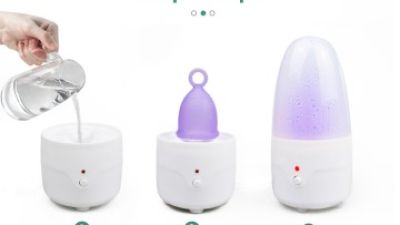
3-Minute Period Cup & Disc Cleaning: How Steam Sterilization Kills 99.9% of Germs

Keeping a menstrual cup or disc clean does not have to be complicated. A button-operated steam sterilizer offers a convenient way to refresh reusable period products in about three minutes. Designed specifically for menstrual cups and discs, it uses high-temperature steam to reach surfaces that may be difficult to clean by hand, helping eliminate up to 99.9% of germs when used according to the instructions.

Operation is simple: place the thoroughly rinsed cup or disc inside the sterilizer, add the recommended amount of water, close the lid, and press the button. The device then creates steam that surrounds the product for consistent cleaning without requiring harsh chemicals. Its compact design also makes it suitable for everyday bathroom use or discreet storage between cycles.

After the sterilization cycle finishes, allow the product to cool before removing it, and make sure it is completely dry before storage or reuse. Regular cleaning with a dedicated steam sterilizer can support a more comfortable period-care routine while helping reusable products stay fresh and ready for the next use.

FAQS

What material documents should I request from a customized menstrual cup manufacturer?

Request complete material specifications, supplier declarations, and batch traceability records. Confirm pigments, additives, and processing agents. “Skin-friendly” is not test evidence.

Which safety tests should a finished menstrual cup pass?

Request independent reports covering cytotoxicity, irritation, sensitization, chemical migration, and microbiological safety. Testing should match the final color and surface treatment. Missing pages are a warning.

Does a quality certification guarantee reliable production?

No. A quality system can support controlled production, but certification alone proves little. Review complaint handling, cleanliness controls, mold changes, and inspection records.

How can I compare customization options accurately?

Confirm dimensions, firmness, stem design, color, logo placement, packaging, and instruction cards. Request dimensional drawings and measured samples. Details become expensive later.

What should I check about minimum order quantities?

Ask whether the minimum applies per size, color, or total order. Request separate costs for molds, samples, testing, packaging, and freight. A low minimum may hide tooling charges.

What should a complete quotation include?

It should list material controls, testing, delivery terms, defect handling, payment stages, and shipping costs. Some quotations exclude testing. That is an easy mistake.

How can packaging protect the product during shipping?

Request moisture-resistant inner packaging, strong outer cartons, batch codes, and storage instructions. Review printing proofs and transport samples. Attractive packaging can still crush easily.

What communication and after-sales support should I expect?

Confirm dimensions, color samples, inspection standards, and approval steps in writing. Request one physical sample before mass production. Ask for complaint channels, replacements, and investigation records.

How should I evaluate the manufacturer’s delivery schedule?

Request dated milestones for sampling, production, inspection, and shipping preparation. Ask what happens after material delays or sample changes. Vague promises deserve caution.

What should happen when quality problems appear after delivery?

The manufacturer should identify affected batches, review records, and document corrective action. No supplier performs perfectly every time. Responsibility should not be quietly shifted.

Conclusion

Choosing the right Customized Menstrual Cup manufacturer starts with clearly defining your product requirements, including cup size, shape, firmness, color, logo, and intended market. Next, evaluate the manufacturer’s experience, production capacity, material quality, testing procedures, and ability to meet applicable safety and regulatory standards. A reliable supplier should provide transparent documentation, use body-safe materials, and maintain consistent manufacturing practices.

You should also compare customization choices, minimum order quantities, pricing, sample policies, quality control systems, and product consistency before making a decision. Pay attention to packaging design, communication efficiency, production lead times, shipping coordination, and after-sales support. Requesting samples and confirming inspection procedures can help identify potential issues early. By assessing every stage from product development to customer service, you can select a dependable manufacturing partner that delivers safe, consistent, and market-ready menstrual cups.

Sofia

Sofia

Sofia is a dedicated marketing professional at Shaanxi Xinrui Zhiyuan International Trade Co., Ltd., where she leverages her extensive knowledge of the company's products to drive engagement and promote brand awareness. With a keen eye for detail and a passion for writing, Sofia frequently updates......
Previous Top China Menstrual Disc Manufacturers for Global Buyers?